
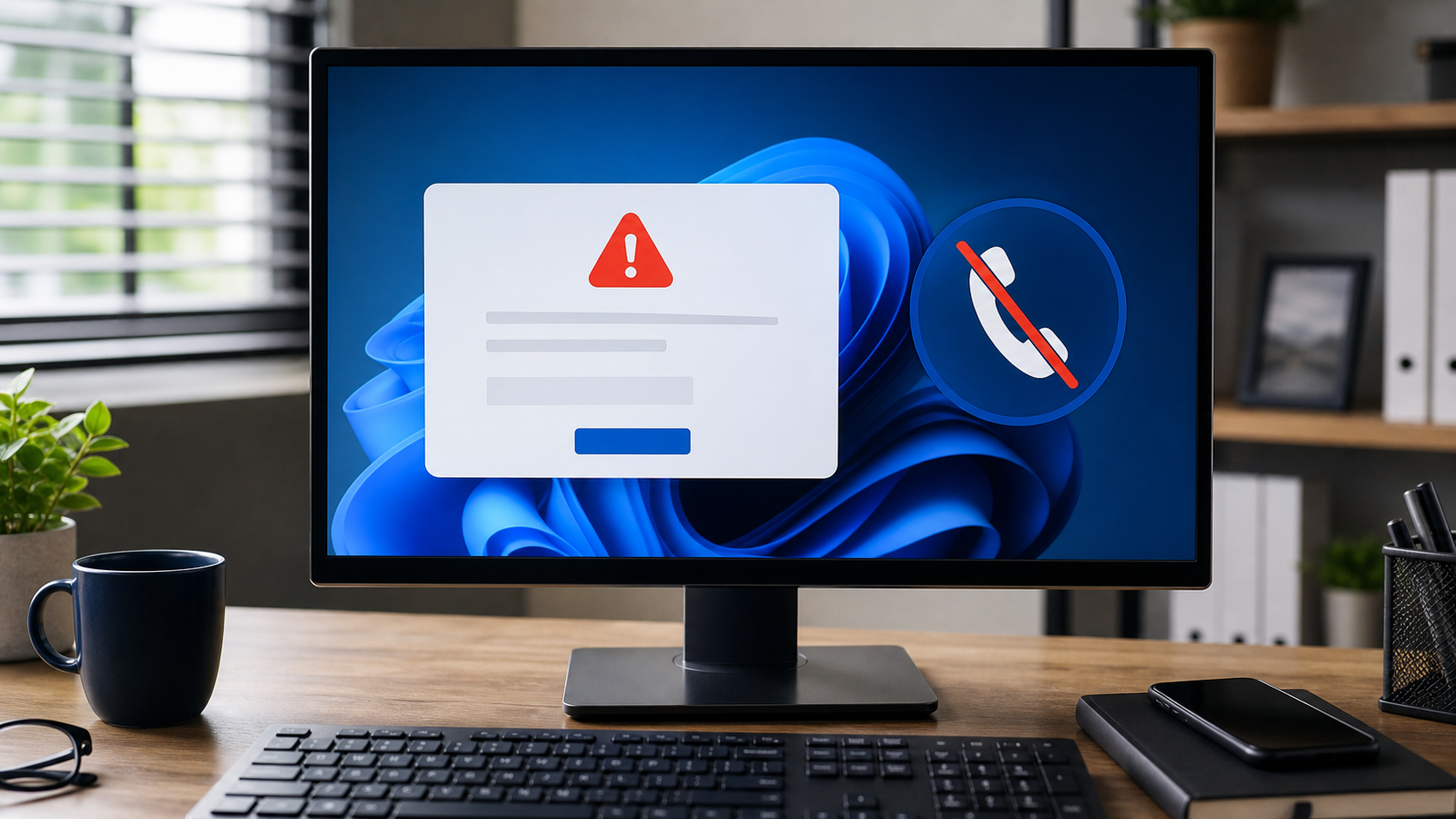
Tech support scams are designed to make people panic. They often appear as pop-ups, fake alerts, emails, or phone calls claiming something is seriously wrong with your computer.
They try to scare you
If a message says your computer is infected, hacked, locked, or being watched, and it tells you to act immediately, be cautious. Scammers rely on urgency.
They want you to call a number right away
Legitimate companies usually do not blast emergency support numbers across your screen and demand a phone call. That is one of the most common scam tactics.
They ask for remote access too quickly
If someone wants to connect to your computer before they have clearly explained the issue or who they are, that is a major warning sign.
They pressure you to pay immediately
Scammers often demand payment before doing anything useful. Some push gift cards, wire transfers, or unusual payment methods.
What you should do instead
Do not call the number on the pop-up. Do not click suspicious alerts. Close the browser if you can. Restart the computer if needed. If you are unsure, get help from someone local and trusted before giving anyone access.
At Clemtech Computers, I help customers in North Alabama sort out suspicious computer behavior and tell the difference between real issues and scare tactics. If something looks off, it is better to ask than guess.
Worried you may have run into a scam? Read more about the fake Microsoft popup scam or contact Clemtech Computers for calm, local help.
